B2B SEO: where to start, at any budget
Your paid campaigns are working, but almost all your search traffic already knows your name. Here's where I'd start with B2B SEO, at any budget, so more of your buyers find you.
Michael D. Markham · · 5 min read
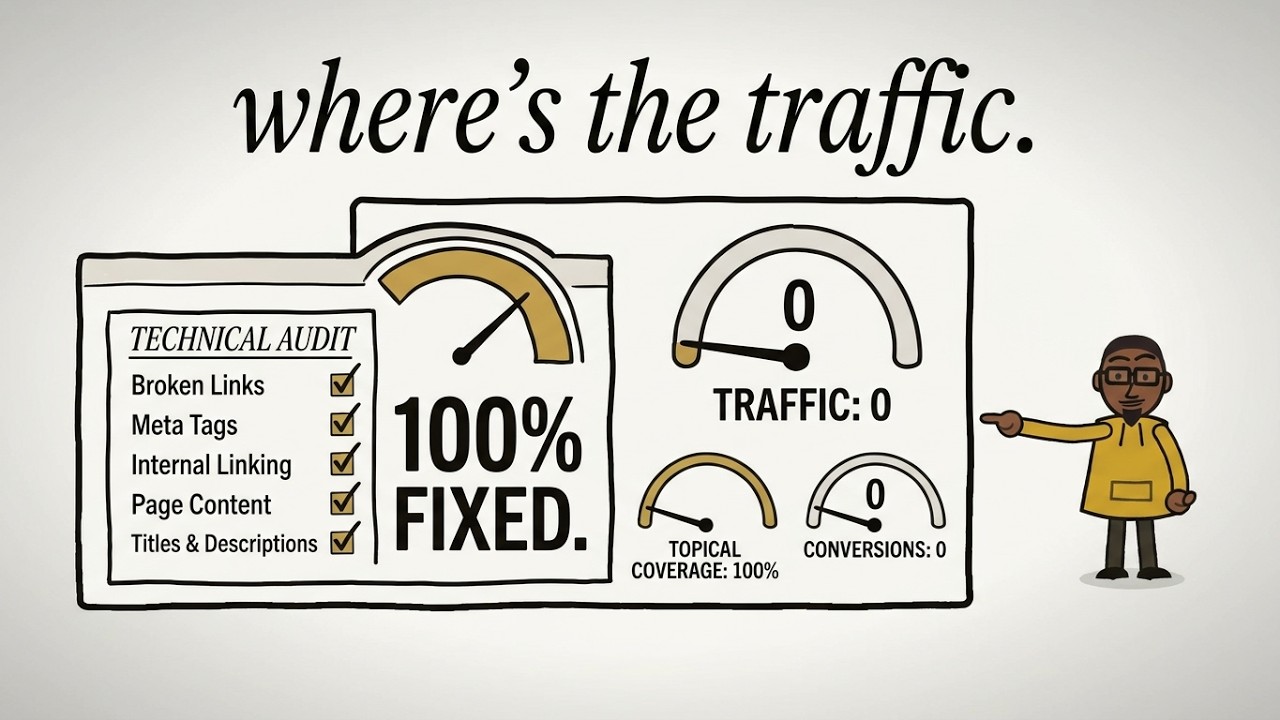
Where I'd start with B2B SEO, at any budget, comes down to four things. Make sure your site can be crawled. Look for the white space in search and in AI answers. Give every channel its own measure on the way to a sale. And work from one roadmap your team can pull from. I walk through all four in this video.
What does a startup's channel mix usually look like?
When I open a startup's Google Analytics, the channel mix tells a familiar story. The paid campaigns are working. Almost all the search traffic comes from people who already know the company's name. Social is quiet, and hardly anyone signs up for the emails.
That makes sense. The ads are built for one goal, like booking a demo, so that's what those visitors came to do. Paid is doing important work. It can be the lifeblood of a company. But even the best campaigns hit their limits and need a refresh.
And that's a lot of pressure on one channel. What happens when the paid budget runs out? Why are the other channels lagging? And where do you find the people and the time to grow them, when the margins are still thin?
Why put effort into search now?
What you really want is something that works, and keeps working. When a channel gets tended, it grows. And there's a lot of peace of mind when people find you on their own.
Search is still growing, and AI search is growing right beside it. On Alphabet's October 28, 2026 earnings call, Google's CEO said their AI investments are driving search query growth, including commercial queries, and that year-over-year query growth was the highest in five years. That's a channel that builds on itself.
Who are you really competing with in search?
When I talk with a client, they're really interested in how they're doing, and how their competitors are doing. There's often a competitor that comes in out of nowhere. Smaller than you, newer than you. And that's who people find when they search for what you sell: the same people you're paying to reach.
Where should a B2B team start with SEO?
Make sure your site can be crawled. At the very least, start here. It's one of the easiest things you can do, and there are free tools that check it for you.
Look for the white space. There's usually so much of it. In the search results, in AI answers and AI Overviews, even in the ad slots. Some of it your competitor already fills. Some of it nobody fills at all.
Turn the gap into your roadmap. The gap between where you are and where you want to be becomes the plan. A channel nobody's using well. A kind of content nobody's making. A product nobody's talking about. That's the white space you go after.
How do you know which channels are working?
Every channel has its own measure on the way to a sale. Impressions and citations in search and AI answers. Reads on your content. Engagement on social. Sign-ups for email. And demos booked on your landing pages. Those small wins add up to the big one. When you measure every step, you can see which channels are moving people forward.
Here's what that looks like in practice. One client asked me whether a blog post was even working. There's only one way to find out, so we looked at the measures we set at the start. In search, it had plenty of impressions and hardly any clicks. But AI answers kept citing it. So it stayed.
Not long ago, a lot of marketing was a hopeful guess. Now you can see what's working, check it fast, and build systems that keep checking as you grow. Once you start showing up, you can compete for more of those searches, across more channels, and start winning them. Then the data tells you what to write next: the questions your buyers keep asking, and the searches where nobody shows up yet.
What if your team doesn't have the time?
Sometimes a channel just doesn't get attention. There's a site build, or a product launch. And the best stories in your company never make it to where your buyers are looking.
That's where I come in, and we work on it together. The goals get clear. The channels and their measures come into focus. The routine work gets automated, and people still sign off where it matters, across every team that needs to be involved.
It doesn't matter where your team is right now. We put the effort wherever the work is ready to move, and where it matters most to your goals. So what do you work on right now? It's all on the roadmap. Grab the next item, see where it stands, and hand it to the team that's ready for it.
Every team has its own policies, workflows and ways of signing off. What we do works with all of that. The goal stays the same: get found in search, get your content in front of your buyers, and make everything perform better.
One thing to try this week
Open Google Analytics and go to Reports, then Acquisition, then Traffic acquisition. That's your channel mix.
Then, in Search Console, filter your search results by branded and non-branded queries. Google's notes on this filter: it isn't available for sub-properties or for sites with a low number of impressions, and its data starts on March 11, 2025.
Are you surprised by what people find you for, or by what they don't find you for?
If you want more of your buyers to find you, in Google and in AI answers, see how I work on B2B and SaaS SEO.
Questions people ask
Where should a startup start with B2B SEO?
Make sure the site can be crawled, then look for the white space in search results and AI answers that nobody fills yet, and turn that gap into one roadmap. Give each channel its own measure so you can see what's moving people toward a sale.
How do you measure B2B SEO when paid is your main channel?
Give every channel its own measure on the way to a sale: impressions and citations in search and AI answers, reads on content, sign-ups for email, and demos booked on landing pages. Then compare channels in Google Analytics under Reports, Acquisition, Traffic acquisition.
Can a blog post be worth keeping if it gets few clicks?
It can. In one client's case, a post had plenty of impressions and hardly any clicks in search, but AI answers kept citing it, so it stayed. Check the measures you set at the start before you cut anything.
More on SEO and AI search
Want this working on your business?
Tell me about your business and I'll come back with a candid read.